A Brief History of IES Activities
The Institute for Ethnic Studies (IES) has a rich history and is considered the oldest research institute in Slovenia. Its origins date back to 1925, when the Minority Institute was founded in Ljubljana as one of the first research institutions in the world dedicated to the study and protection of minorities. Throughout its history, the IES has navigated turbulent and challenging periods, including totalitarian regimes, World War II, changes of national borders, and the dissolution of Yugoslavia. Despite these challenges, its researchers have remained active in analysing, highlighting, and interpreting issues related to national minorities and minority protection at the highest scientific level. Over the past 100 years, the Institute has grown into one of the most prominent centres for ethnic studies in Europe and beyond.
Minority Institute (1925–1941)
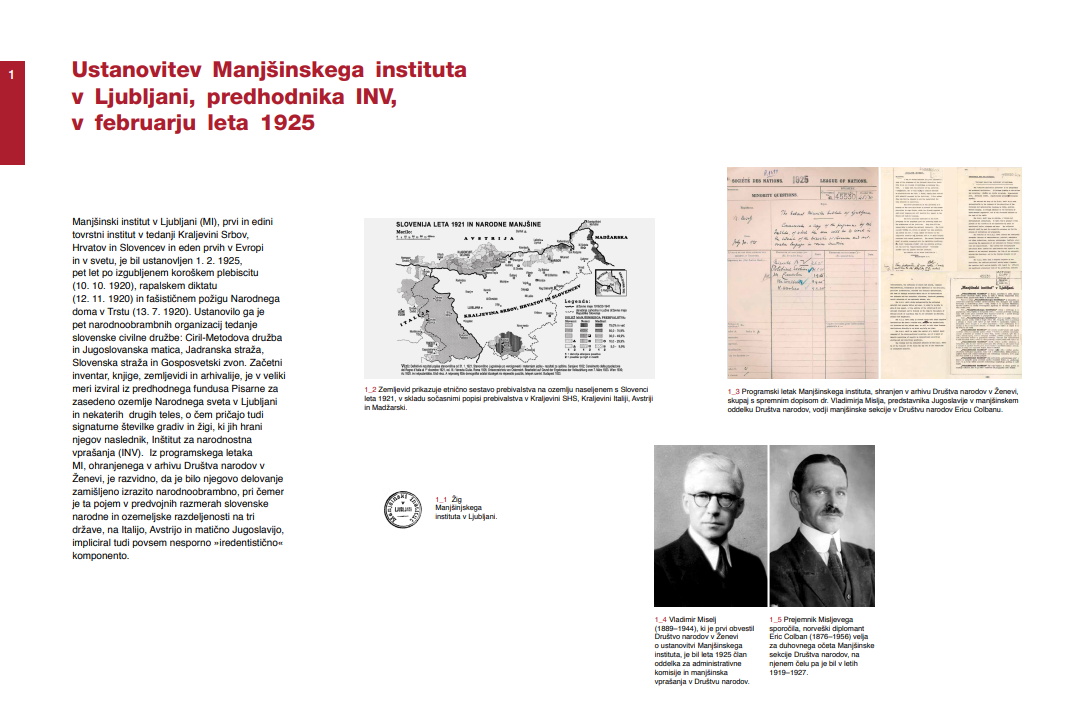
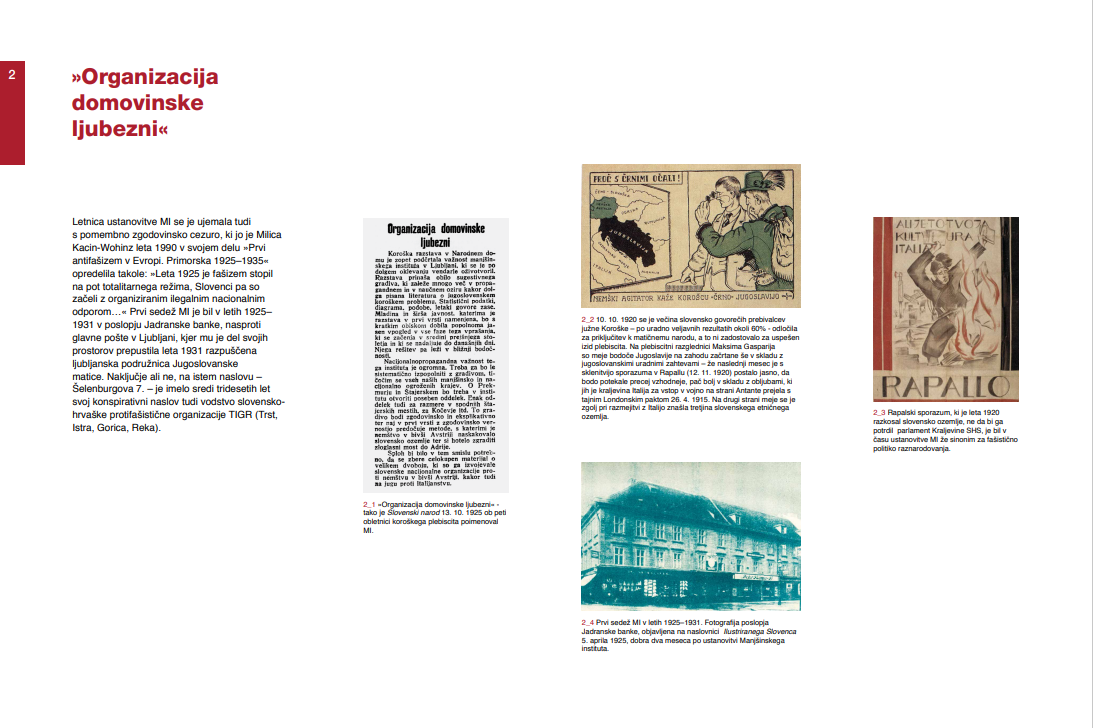
The Minority Institute was established in response to the specific geopolitical shifts in Europe and present-day Slovenia after World War I. The collapse of the great empires such as the Habsburg, Russian, German, and Ottoman Empires led to the creation of new states and redefined the Slovene territory, now divided among four different states. While most of the territory became part of the State of Slovenes, Croats and Serbs (later the Kingdom of Serbs, Croats and Slovenes, and from 1929 onwards, Yugoslavia), as much as a third of the Slovene population remained outside the borders of its kin state. In 1920, the Treaty of Rapallo settled the border issue between the Kingdom of Serbs, Croats and Slovenes and Italy, with the latter acquiring western parts of Slovenia and Croatia, including the former land of Gorizia and Gradisca, parts of Carniola, Trieste, and Istria. In Carinthia, the border was determined by a plebiscite, with the majority voting to join Austria. The Treaty of Trianon, also signed that year, defined the borders of post-war Hungary, leading to the annexation of Prekmurje into the Kingdom of Serbs, Croats and Slovenes, while Hungary retained nine Slovene villages around Monošter/Szentgotthárd in the Raba Region. It is worth noting that the Slovene territory incorporated into the Kingdom of Serbs, Croats and Slovenes had a significant German population (Kočevje, major towns) and a Hungarian community (Prekmurje). Meanwhile, the Slovene community in all three neighbouring states faced oppression and attempts to suppress their national rights and identity. The situation was most severe in Italy, where repression and violence against Slovenes began immediately after World War I, worsening considerably after the fascist takeover in 1921.

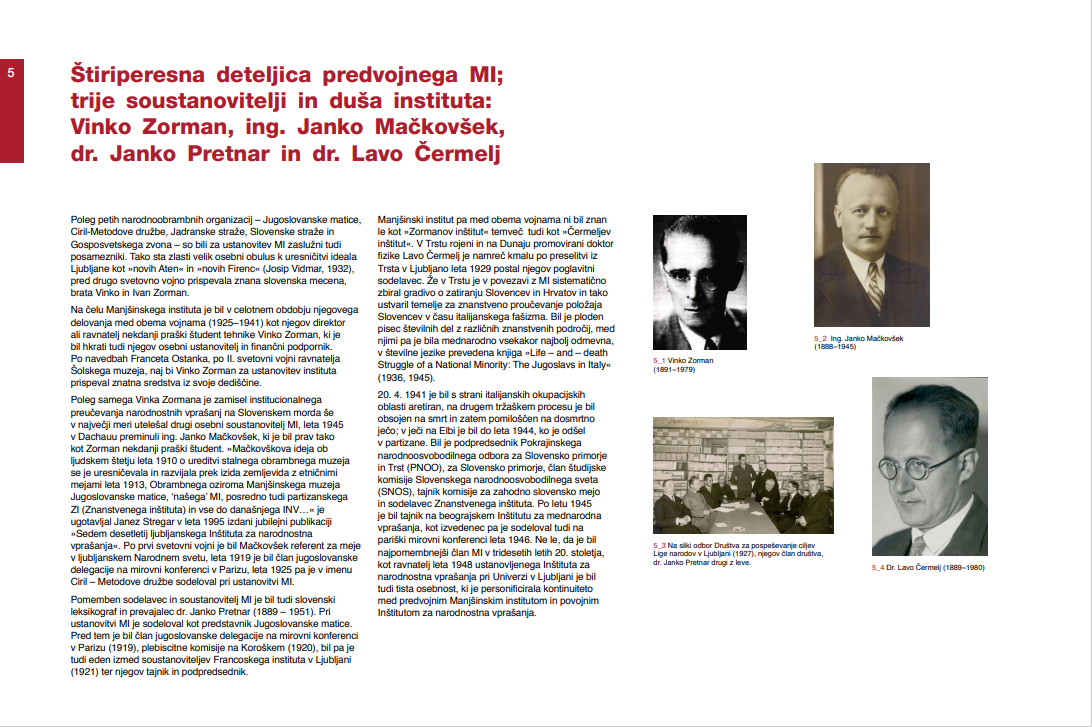
The new political situation in Slovenia and its immediate neighbourhood created an urgent need for scientific and systematic research on minority and ethnic dynamics and relations. The primary response to these challenges was the establishment of the Minority Institute, which officially began its work on 1 February 1925. The Institute was founded on the initiative of Slovene intellectuals, many of whom were refugees and exiles from Carinthia and Primorska, along with five national defence organisations. The Institute was led by Vinko Zorman, who financed its establishment and continued supporting it until World War II. The primary mission of the Institute was to study the situation of Slovene communities in neighbouring countries, as well as the German and Hungarian minorities within the Drava Banovina. Researchers systematically collected documentation and literature on minority issues, marking the beginning of institutionalised research on ethnic and minority issues in Slovenia. The local authorities also recognised the importance of such research and began financing the Institute’s activities from 1930 onwards.
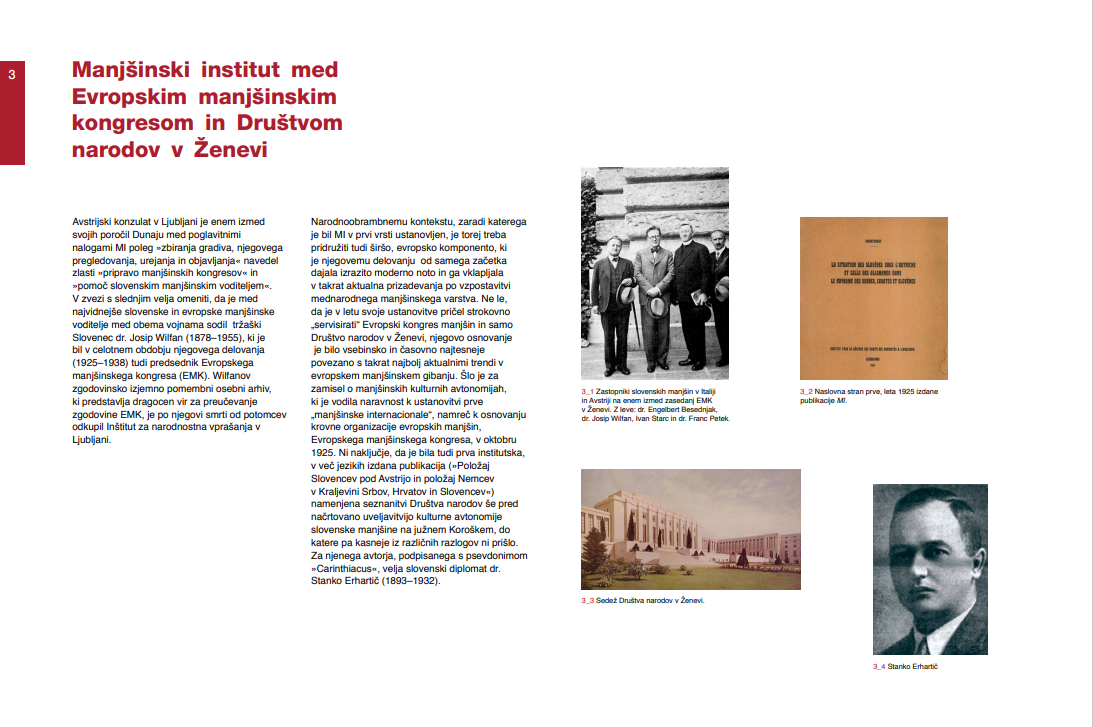
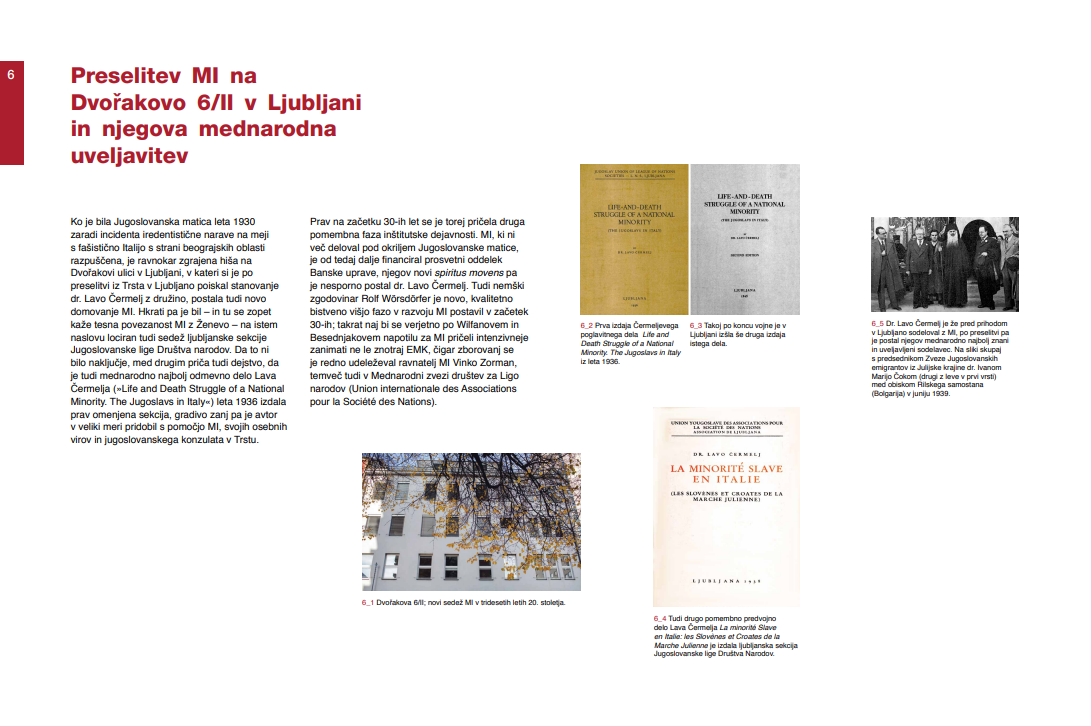
As the post-wat system of peace treaties did not provide effective protection of minorities and their legal protection was still in its early stages of development, the Institute sought to bridge this gap by informing policymakers and the public through publishing newsletters and scientific texts, delivering lectures, and engaging in relations with Slovenes living in neighbouring countries. The Institute’s first publication – a comparative analysis of the situation of the Slovene community in Austria and the German community in the Kingdom of Serbs, Coats and Slovenes – was published in four languages and attracted significant attention across Europe. Its author was the lawyer and diplomat Stanko Erhartič. The work of Lavo Čermelj was also notable, focusing on the Slovene minority in Italy and laying the foundations for the scientific study of their situation. He intensively drew attention to the persecution of the Slovene community under fascism, publishing the acclaimed Life-and-Death Struggle of a National Minority: The Jugoslavs in Italy in 1936.
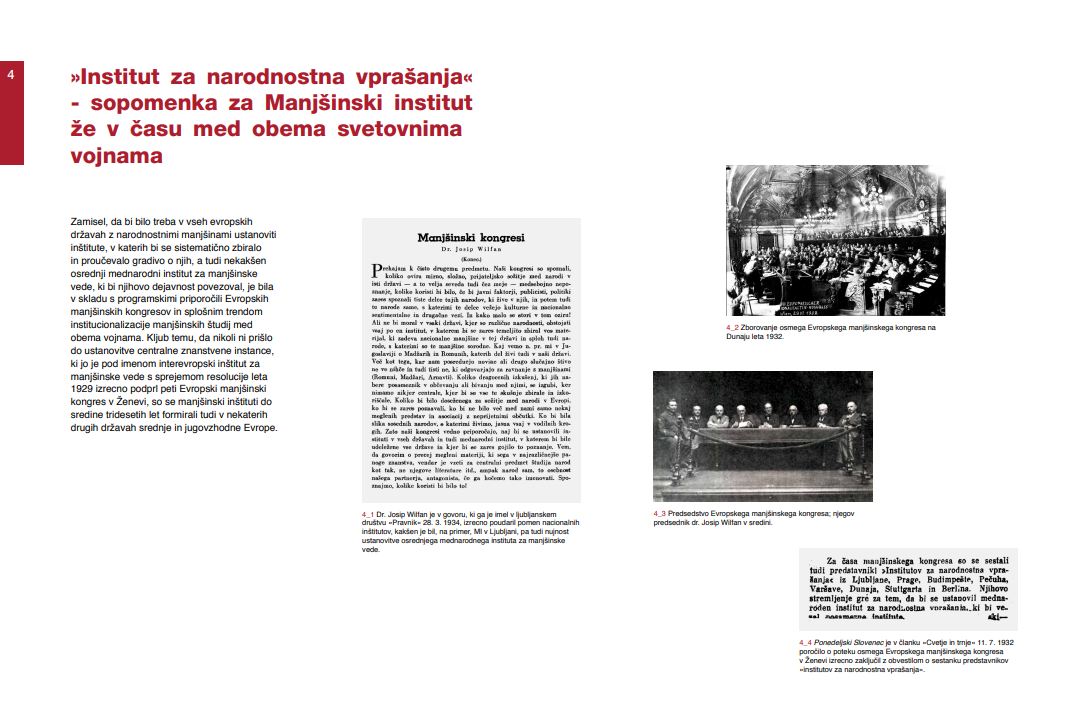
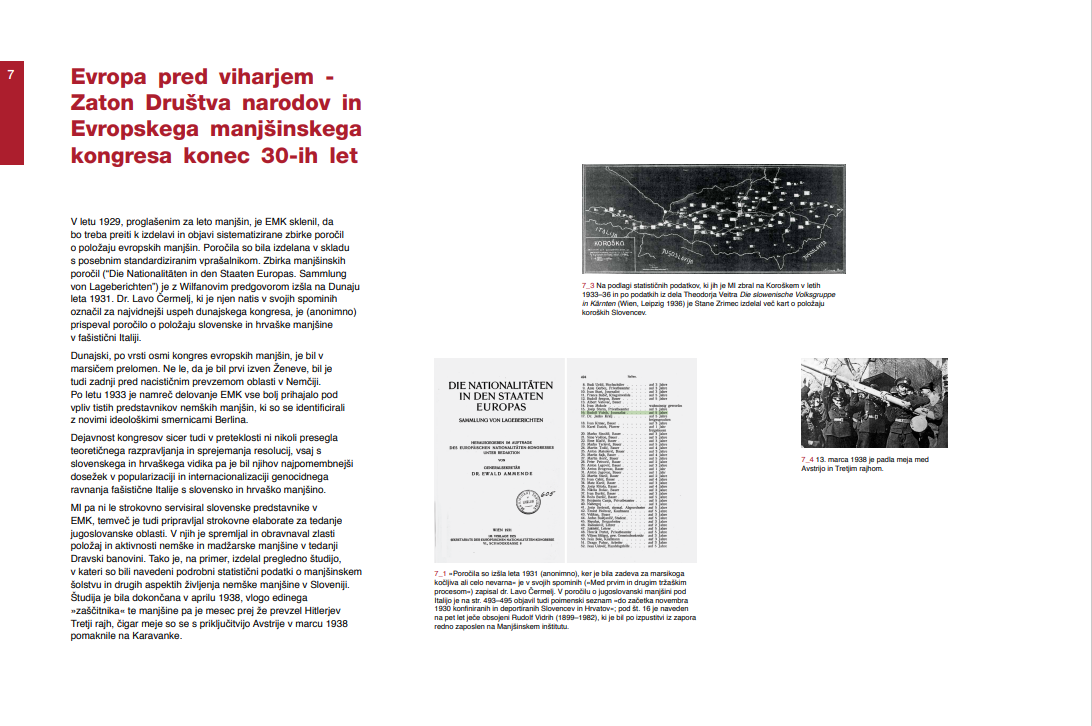
The Minority Institute was also actively involved in the Congress of European Nationalities, an organisation dedicated to protecting the interests of European national minorities. Among the initiators of the first Congress meeting, which took place in Geneva in October 1925, was Josip Vilfan, a Slovene deputy in the Italian Parliament. He chaired the Congress of European Nationalities and headed its Standing Committee until autumn 1939, when the Congress ceased to function. Representatives of more than 30 nationalities participated in the Congress. The Congress took a legitimist position, stressing the immutability of national borders and advocating cultural autonomy for minorities instead of self-determination. The Congress strongly opposed all forms of forced assimilation and highlighted the importance of securing the status of national minorities for maintaining European peace. It also promoted the generalisation of minority laws based on collective protection. Since its founding, the Minority Institute strongly supported the Congress of European Nationalities. Its researchers actively participated in meetings and presented their research findings and publications alongside representatives of other countries.

Scientific Institute of the Slovene National Liberation Council (1941–1948)
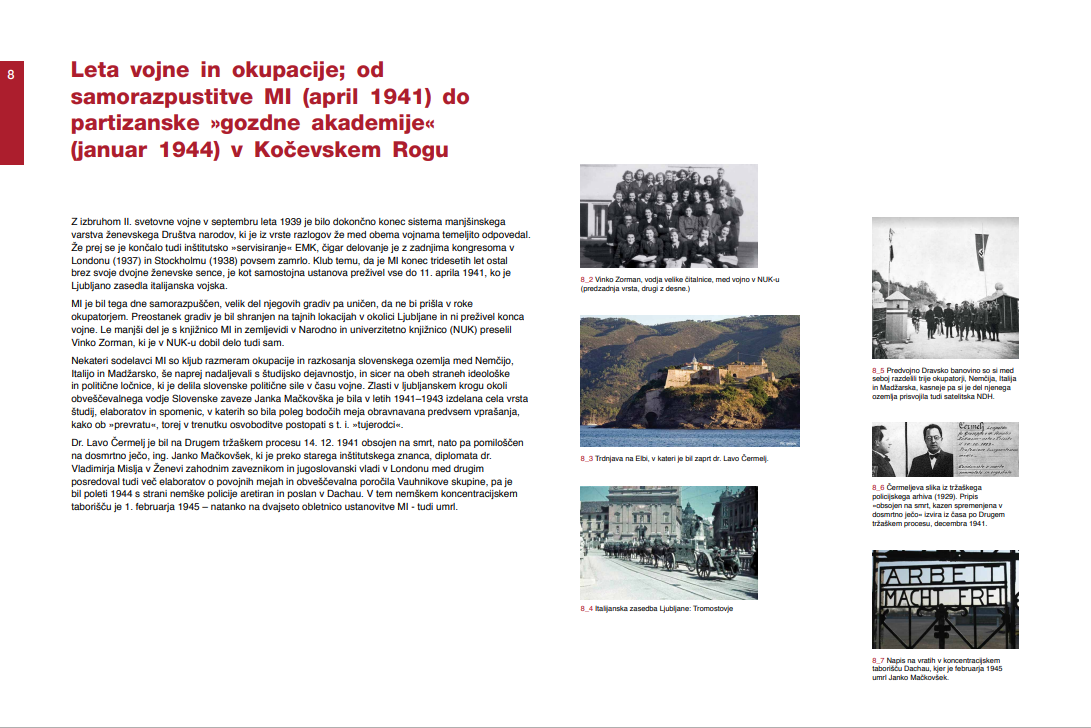
World War II (1939–1945) had a devastating impact on Slovenia. After the invasion of Yugoslavia in April 1941, the Slovene territory was divided among Germany, Italy, and Hungary, leading to widespread violence, destruction, and national oppression. With the occupation, the Minority Institute was dissolved and ceased to operate. Most of its archives were either lost in the ensuing chaos or, due to the sensitivity of the information, deliberately destroyed to prevent them from falling into the hands of the occupying forces. However, the Institute’s extensive book collection was preserved at the National and University Library, where Vinko Zorman worked as a librarian.
In the following months, an anti-fascist resistance movement emerged in the form of the Liberation Front (OF), which sought, among other goals, to liberate and unify the fragmented Slovene nation. This was seen as a realisation of the programme for a United Slovenia in the exceptional circumstances of war. As part of these efforts, in October 1941, the Executive Committee of the Liberation Front established a special commission to study Slovenia’s future borders. The commission, which operated in Ljubljana until February 1942, was first led by Anton Melik, later by Fran Zwitter, and included notable members such as Lovro Kuhar – Prežihov Voranc, Edvard Kocbek, Svetozar Ilešič, Bogo Grafenauer, Maks Miklavčič, and, until his expulsion from the Liberation Front, Črtomir Nagode. The commission adopted the principled position that Slovenia’s future borders should include the entire Slovene ethnic territory, reclaiming areas that had been forcibly alienated since the mid-19th century.
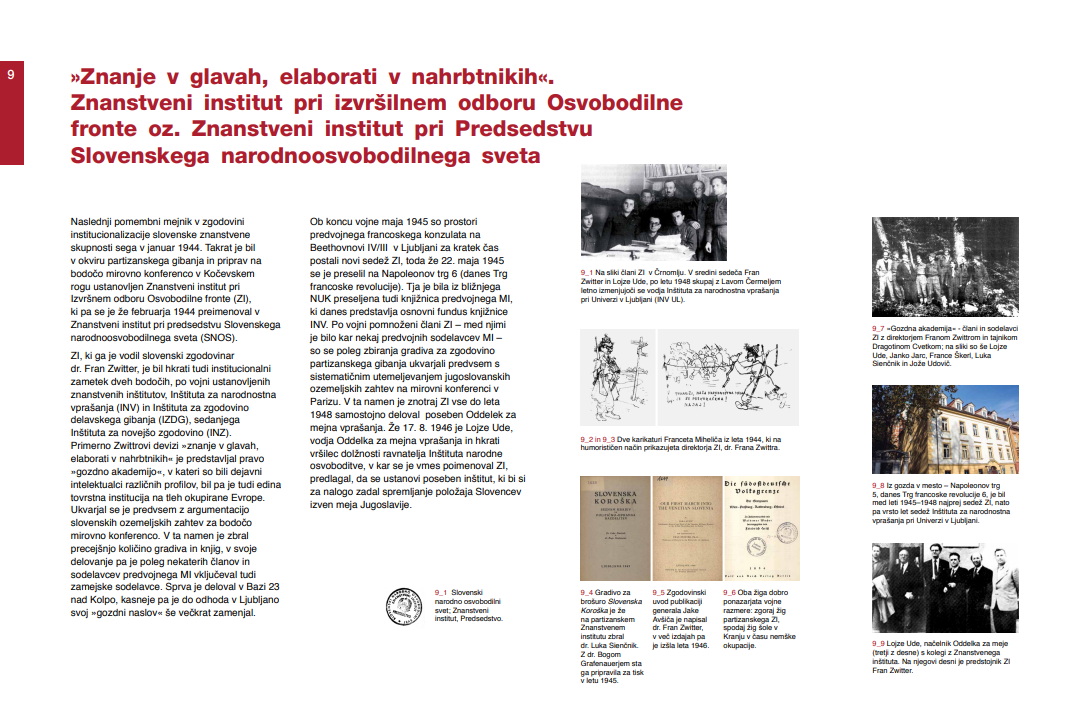
The next major step came at the beginning of 1944, shortly after Italy’s capitulation. On 9 January 1944, the Executive Committee of the Liberation Front decided to establish a Scientific Institute, which was attached to the Executive Committee of the Liberation Front and later to the Slovene National Liberation Council. Its primary goal was to prepare material and official Slovenia’s positions on future state borders. The Institute was conceived not only as a specialist research institution but also as a makeshift academy of science, given wartime realities. It had a multidisciplinary structure, consisting of departments for history and geography, law, medicine, technical and economic studies, and education. In its first weeks, the Institute’s researchers produced several reports on border issues, making it the only institution of its kind in occupied Europe. The official decree establishing the Scientific Institute was signed on 12 January 1944 by the Executive Committee of the Liberation Front, appointing Fran Zwitter, an assistant professor at the University of Ljubljana and historian, as Director, and Boris Ziherl as his deputy. The Institute’s first Secretary was Lojze Ude, succeeded by Dragotin Cvetko in March 1944.
The Institute operated under partisan warfare conditions, forcing it to relocate multiple times. Initially based at Baza 13-23, it moved in May 1944 to Baza 20 in Kočevski Rog. In December 1944, it relocated to Črnomelj, and at the end of the war to Ljubljana. The most active of its five departments was the Department of History and Geography, led by Fran Zwitter. His associates collected archives and documents related to occupation regimes, books, partisan publications, and other materials. Until early 1945, the department operated out of wooden barracks, and much of its archives and library – which had amassed around 1,000 books during the war – had to be hidden in containers in the surrounding area. The Institute was able to obtain books, maps, and statistical materials from Trieste and, via the British Military Mission, from London. Its researchers produced numerous studies and reports on national and border issues. The Institute systematically expanded its documentation holdings and actively worked on archiving the Slovene anti-fascist and national liberation struggle. In January 1945, the Institute drafted the Decree of the Presidency of the Slovene National Liberation Council on the Protection of Libraries, Archives, and Cultural Monuments. In March 1945, Zwitter was appointed Secretary at the Institute for the Study of International Relations of the Foreign Ministry of the Democratic Federal Republic of Yugoslavia, and Lojze Ude was appointed acting Secretary of the Scientific Institute. After the liberation and the end of the war, the Institute focused on two main activities: collecting documentation on the history of the liberation movement, and systematically publishing and substantiating territorial claims for new, fairer national borders. To this end, the Institute produced dozens of publications in Slovene, Serbo-Croatian, and other world languages. It also played a significant role in preparing Yugoslav diplomatic arguments for redrawing the northern and western borders. In the immediate post-war period, the Institute underwent a major structural change. On 1 January 1946, it was removed from the jurisdiction of the Presidency of the Slovene National Liberation Council and placed under the Presidency of the National Government of Slovenia. However, on 7 February 1948, the Prime Minister of the People’s Republic of Slovenia, Miha Marinko, and the Minister of Public Education, Jože Potrč, signed a decree dissolving the Institute, effective 10 February 1948. The decree also included provisions for the establishment of the Institute for Ethnic Studies (IES) at the University of Ljubljana, ensuring that research on national and ethnic questions continued under a new institutional framework.
The Institute for Ethnic Studies in the Federal People’s Republic of Yugoslavia and the Socialist Federal Republic of Yugoslavia (1948–1991)
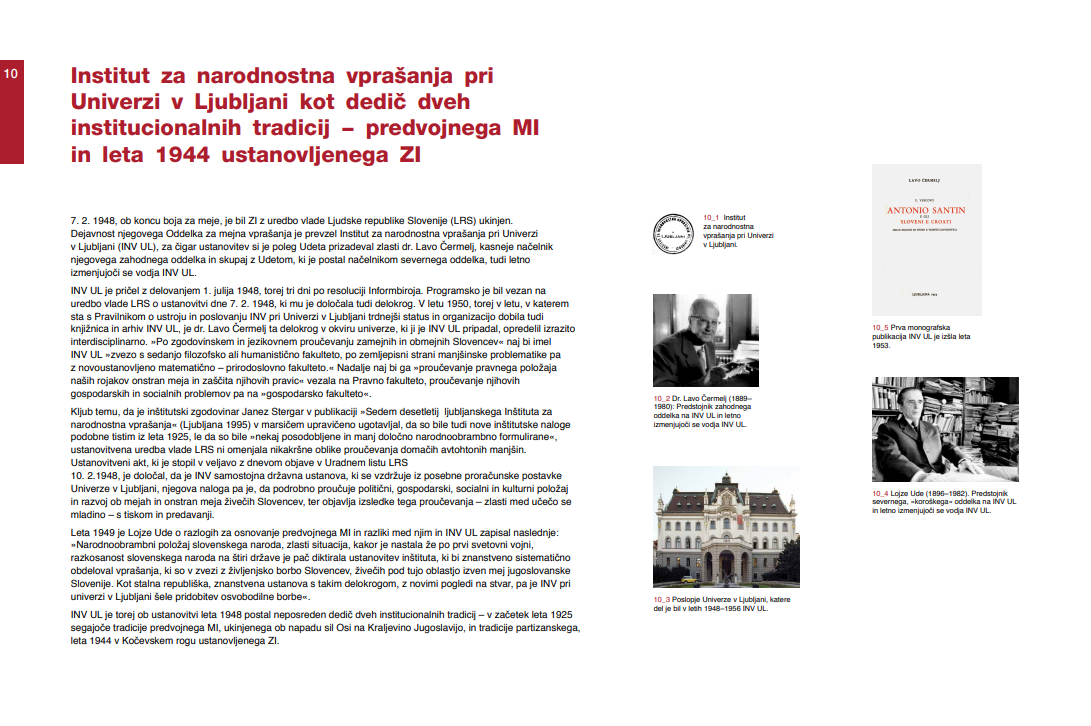
From 1956, the newly established Institute for Ethnic Studies (IES) became part of the University of Ljubljana. While its institutional framework changed, the core mission of the IES remained largely the same as that of the former Minority Institute. Its work focused on the political, economic, social, and cultural situation and development of Slovene communities in neighbouring and other countries. During its early decades, research was primarily centred on the history and contemporary situation of Slovene communities in Italy and Austria. The IES played an active role in the negotiations for the Austrian State Treaty, particularly in efforts to secure favourable provisions for minority protection. Additionally, the Institute carried out various foreign policy tasks related to Slovenes in neighbouring counties. Between 1948 and 1956, Lojze Ude and Lavo Čermelj alternated as IES Directors.
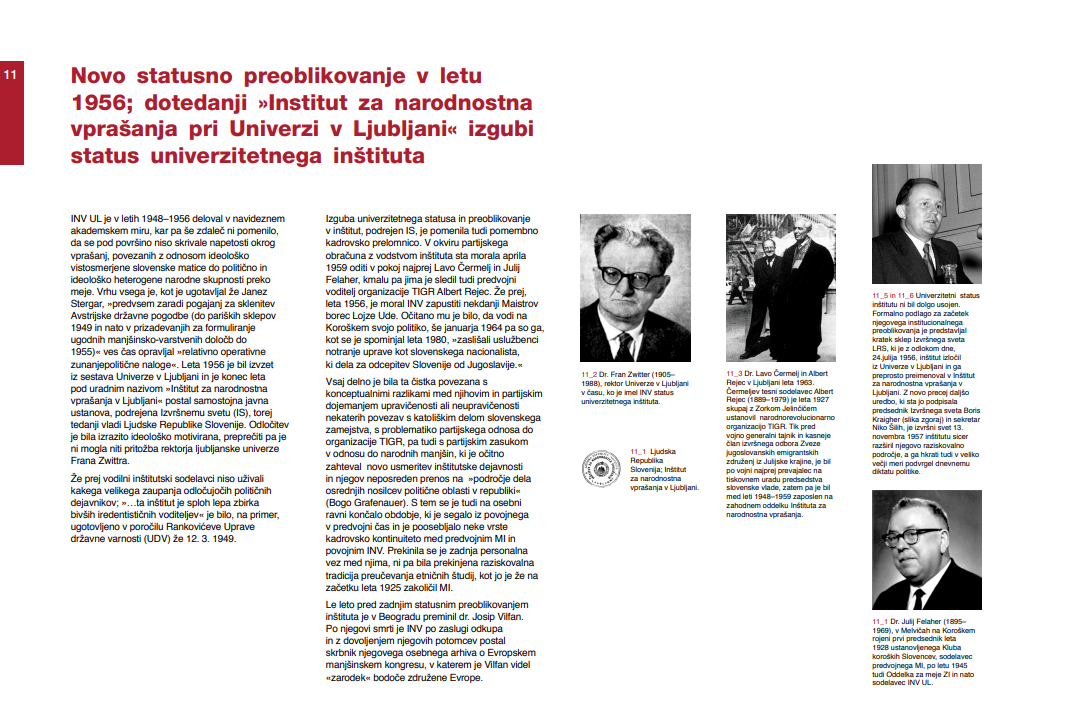
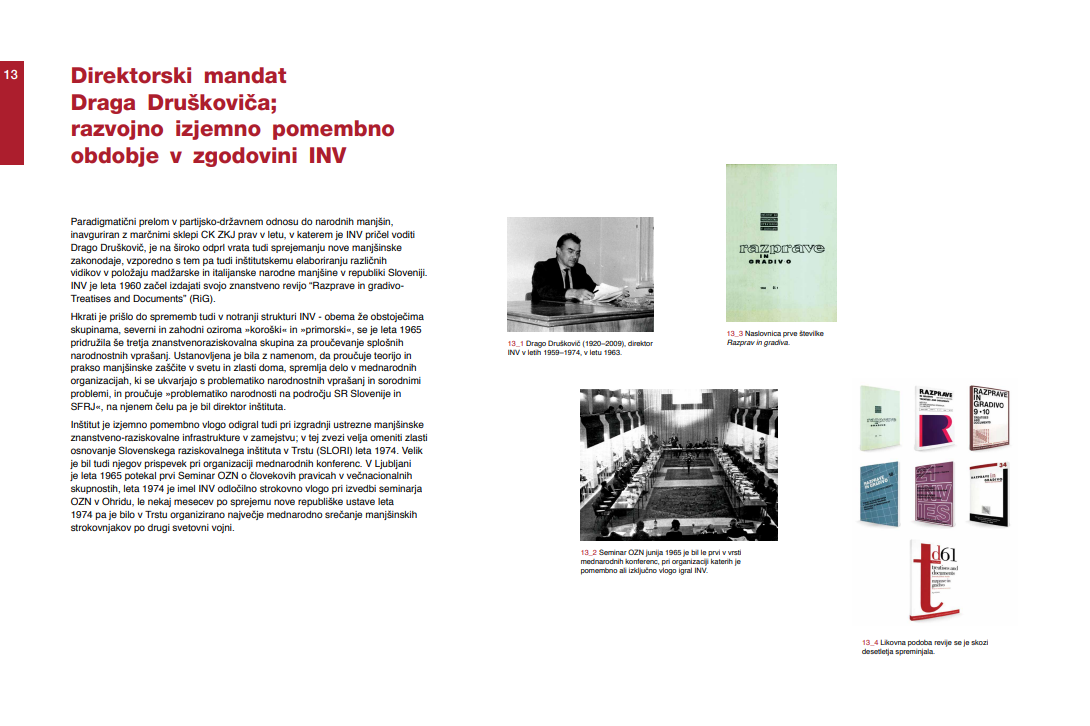
The latter half of the 1950s brought several shifts in the Institute’s activities. On 24 July 1956, the Executive Council of the People’s Republic of Slovenia issued a decree separating the IES from the University of Ljubljana and renaming it Institute for Ethnic Studies in Ljubljana. This change also led to personnel shifts, as several of the Institute’s senior researchers – Lavo Čermelj, Albert Rejec, and Julij Felaher – were forced into retirement, largely due to political pressure. In 1959, Lojze Ude was also dismissed and later took up a new post at the National and University Library. With the arrival of a new generation of researchers and leadership, the Institute – now led by Drago Druškovič – gradually expanded its research scope to include theoretical and practical issues concerning minority protection worldwide, international relations, and equal rights for nationalities within Yugoslavia. Research also strengthened on the Slovenes in the Raba Region in Hungary, as well as the Hungarian and Italian communities in Slovenia.
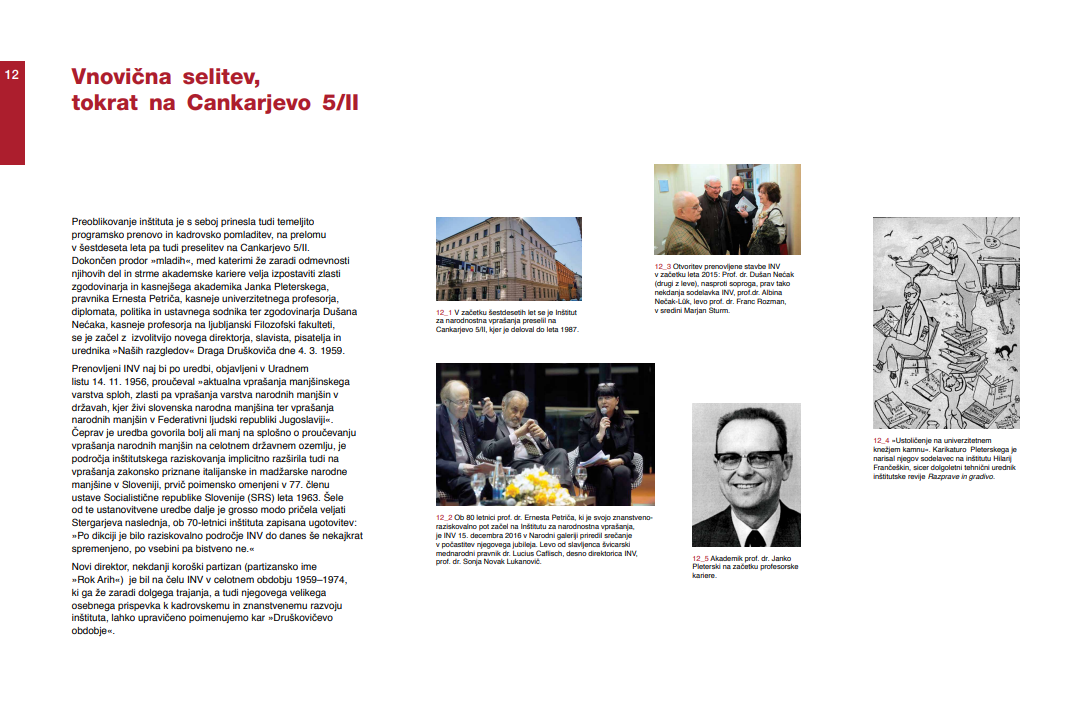
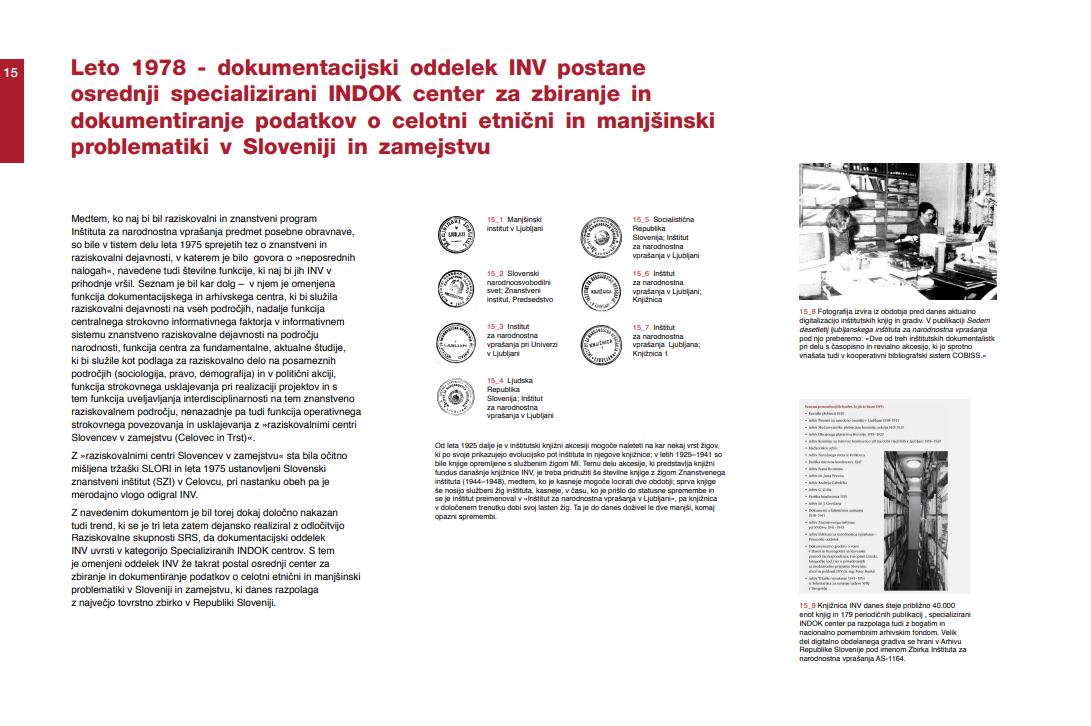
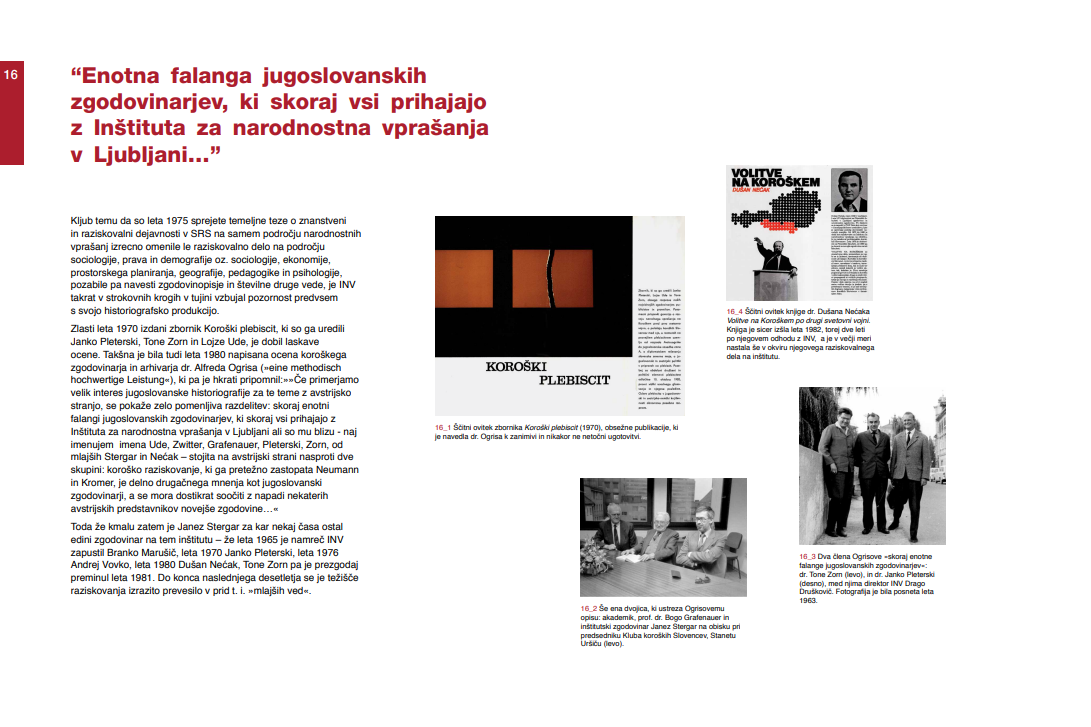
In 1960, the Institute launched its academic journal, Razprave in gradivo / Treatises and Documents, which over the decades became the leading publication in the field of ethnic studies in Slovenia. To this day, it remains a key reference for researchers in Slovenia and among Slovenes in neighbouring countries. The journal publishes scholarly contributions from both Slovene and international authors, with a special emphasis on minority studies. The IES also gained greater international recognition through its involvement in two major UN conferences: in June 1965, the Institute prepared background materials for the UN seminar on human rights in multi-ethnic communities, held in Ljubljana – the first international seminar of its kind. In 1974, IES researchers also participated in a UN seminar on minorities in Ohrid. Beyond these global engagements, the Institute frequently organised conferences and expert meetings, including a consultation on the status of Slovene and Croatian minorities in Austria (1976), a seminar on the international legal protection of human rights in Brdo pri Kranju (1981), and an OECD seminar on education in multinational communities in Ljubljana (1985). Alongside its research and international activities, the IES played a key role in establishing scientific research infrastructures for minority communities in neighbouring countries. A major achievement in this regard was the founding of the Slovene Research Institute in Trieste (SLORI) in 1974. From the outset, the IES also maintained a strong partnership with the Slovene Research Institute in Klagenfurt, founded a year later.
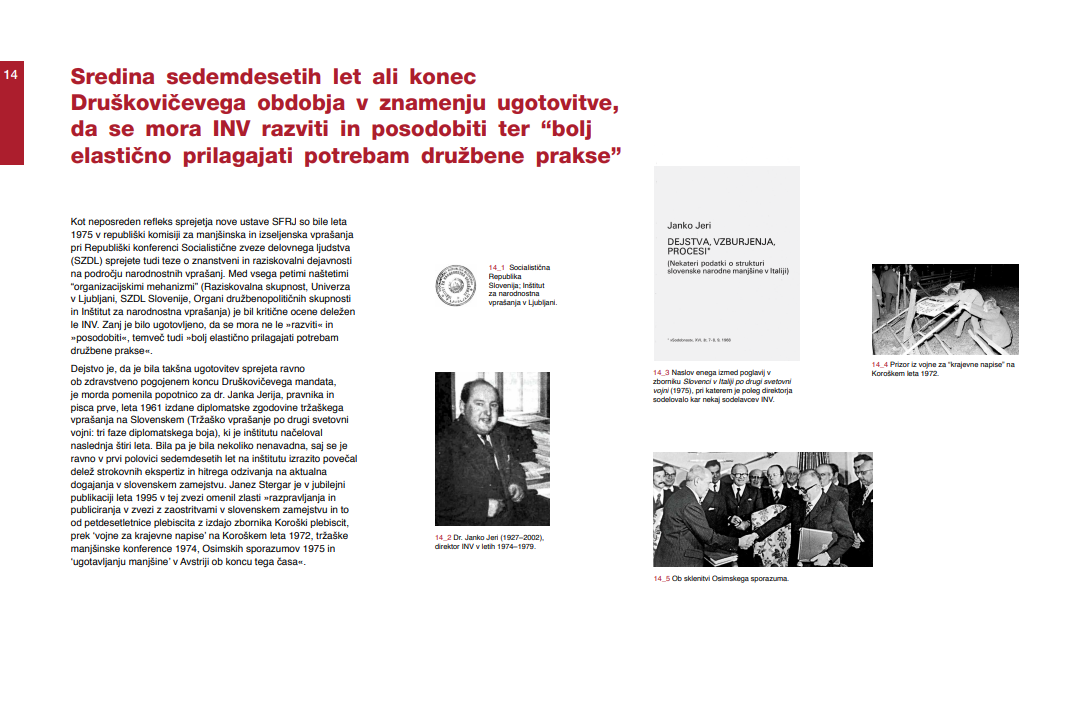
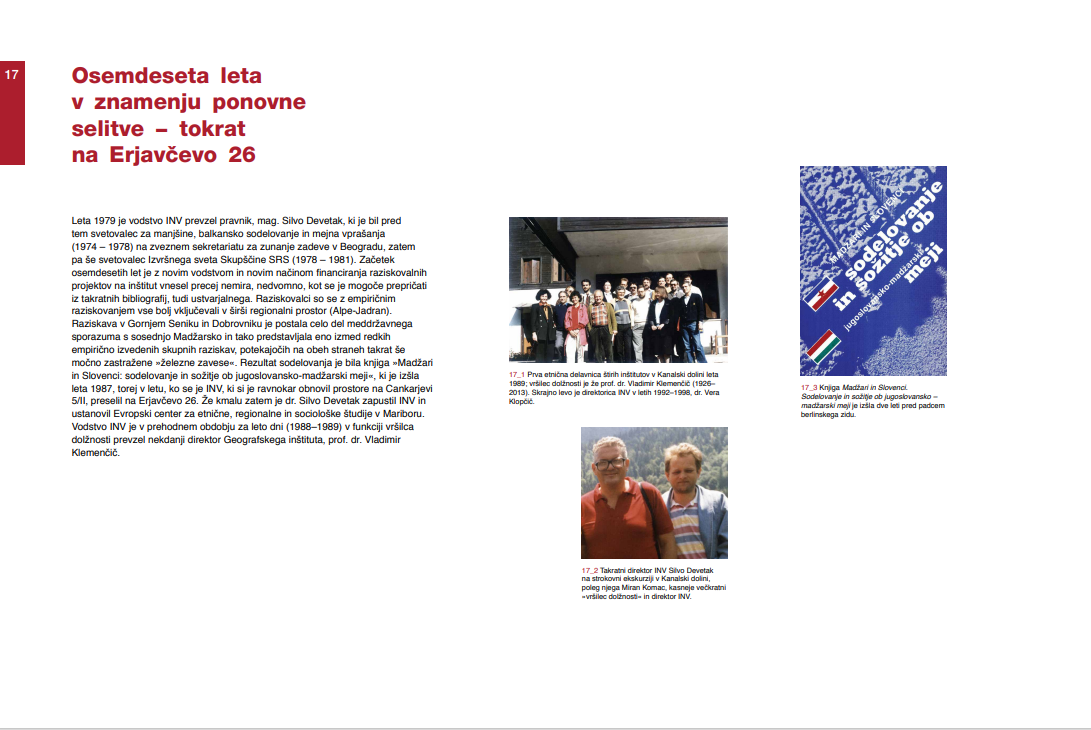
With Drago Druškovič’s term concluding in 1974, the position of Director was held by Janko Jeri, Silvo Devetak, Vladimir Klemenčič, and Miran Komac until Slovenia’s independence in 1991. In the late 1980s, the Institute relocated to its current premises at Erjavčeva 26.
The Institute for Ethnic Studies in Independent Slovenia (1991–)
The independence of Slovenia, along with the new economic, social, ideological, and political landscape in Europe – particularly in Yugoslavia and the former Eastern Bloc – during the transition from the 1980s to the 1990s, had a direct impact on the work of the Institute for Ethnic Studies in Ljubljana, then led by Miran Komac. The Institute played an active role in shaping Slovenia’s new Constitution. Constitutional lawyer Mitja Žagar contributed as a member of the expert commission on human rights and freedoms, ensuring the constitutional protection of the Roma ethnic community. In 1992 and 1993, the Institute was involved in the drafting and ratification of the Agreement Guaranteeing Special Rights of the Slovene National Minority in the Republic of Hungary and the Hungarian National Community in the Republic of Slovenia. Meanwhile, on 30 October 1992, the Institute became one of the first public research institutions established under the legislation of the new Republic of Slovenia. From that point on, its official name became the Institute for Ethnic Studies (IES). At the same time, its founding act was amended, making the Government of the Republic of Slovenia, the Slovene Academy of Sciences and Arts, and the Faculty of Arts of the University of Ljubljana the official founders of the Institute. That same year, Vera Klopčič was appointed Director.
In the early 1990s, new research themes emerged, drive by social and geopolitical transformations, particularly in the former Yugoslavia. The Institute adapted quickly, incorporating studies on Slovene immigrants in former Yugoslav republics, “new” minorities (primarily immigrant communities from former Yugoslavia who settled in Slovenia since the late 1960s), and the status and protection of the Roma community in Slovenia. The Institute’s expanded research agenda did not go unnoticed. On 18 October 1995, marking its 70th anniversary, the President of Slovenia Milan Kučan awarded the Institute the Silver Honorary Medal of Freedom of the Republic of Slovenia “for its long-standing, systematic, and successful study of minority issues in Slovenia and the Slovene national community outside the borders of the Republic of Slovenia.”
In 1998, Mitja Žagar was appointed Director, a position he held for the next decade. The most significant achievements during this period include the establishment in 2001 of a specialised internal unit for the study of interethnic relations and minority protection in Southeastern Europe – the International Centre for Interethnic Relations and Minorities in Southeastern Europe, and the establishment of the Lendava Unit in 2005, focusing on the ethnic and social situation on both sides of the Slovene-Hungarian border.
In 1999, Slovenia introduced a new system for funding institutional research, primarily through research programmes. The Institute launched its own programme, Ethnic and Minority Studies and the Slovene National Question, which continues today under the slightly revised title: Minority and Ethnic Studies and the Slovene National Question. The programme had two main objectives. First, it aimed to advance theoretical and empirical ethnic studies in Slovenia and globally while developing original research databases. Second, it sought to contribute to social development of Slovenia and the broader region by promoting peace and stability in pluralistic modern societies. These societies must be built on the principles of equal inclusion, integration, protection, and participation of both minority and majority communities and their members. The interdisciplinary team – composed of anthropologists, ethnologists, geographers, political scientists, linguists, sociologists, lawyers, historians, and cultural studies experts – focuses on key thematic areas such as: minority, migration, and integration laws, policies, and strategies; national/ethnic, cultural, and linguistic diversity in Slovenia; Slovene communities in neighbouring countries; the Roma community in Slovenia; processes and dimensions of immigrant integration; demographic and migration trends; open and inclusive public dialogue; and management of social relations and crises. Additionally, research extends to bilingual education systems in ethnically mixed areas within Slovenia and neighbouring countries. In 2019, a new research programme, Slovenehood Dimensions between Local and Global at the Beginning of the Third Millennium, was approved. This initiative involves three institutions: Koper Science and Research Centre (leading role), Institute for Ethnic Studies, and SLORI.
Between 2007 and 2010, the Institute was led by Director Cirila Toplak and Acting Directors Damir Josipovič and Miran Komac. In 2010, Sonja Novak Lukanović was appointed Director. Under her leadership, the IES has undergone significant improvements and advancements. During her first term, the Institute’s headquarters at Erjavčeva 26 were expensively renovated. After years of searching for solutions, this upgrade finally provided the IES with suitable facilities for its research activities at the existing location. The opening ceremony was held on 1 April 2016. In 2017, the Rijeka Unit was established, marking a milestone as the first branch of a Slovene research institute abroad. This unit plays a key role in researching and monitoring the situation of the Slovene community in Croatia. In 2017, the IES also secured a new and important opportunity for additional funding, allowing it to enhance its scientific work. This funding enabled the Institute to undertake professional development tasks aligned with the needs of various ministries and state bodies. In this capacity, the IES primarily collaborates with the Ministry of Education, providing studies on minority education and multilingual education. It also contributes to the development of baselines for reforming specific areas of the education strategy. Particular attention is given to supporting and developing Slovene language education in neighbouring countries. With the launch of the 2019 research programme, the IES further expanded its activities in minority studies, broadening its scope to cover a wide range of topics related to minority communities.
In recent years, the IES has intensified its efforts to attract international projects and strengthen its network with related institutions abroad, particularly in neighbouring countries and Southeastern Europe. These efforts aim to enhance the visibility of its scientific research, promote its findings more effectively, and position the IES as a leading international reference institution in the field. Today, the Institute’s research is highly multidisciplinary and interdisciplinary, carried out by experts from diverse scientific backgrounds, many of whom belong to minority communities. Its work focuses on themes that foster peace, coexistence, democracy, and the stable development of pluralistic societies. By strengthening interethnic relations, promoting effective diversity management, and supporting the full integration of migrant communities, minorities, and other vulnerable groups, the Institute contributes to a more inclusive and cohesive society. The IES disseminates its findings through high-quality scientific publications, media engagement, and educational activities. Additionally, the IES serves as a research hub for international scholars and individuals studying ethnic, minority, and border issues. The Institute also collaborates with and supports various associations and clubs, including the Club of Carinthian Slovenes, the Club of Slovene Students from Neighbouring Countries, the Society of Slovene-Austrian Friendship, the Society for Applied Linguistics of Slovenia, and the Society for the Study of Democracy and Interethnic Relations.
Recently, INV has focused more intensively on acquiring international projects and establishing links with similar institutions abroad, primarily from neighboring countries and the region of Southeast Europe, in order to more effectively promote the results of its scientific research and work and thus become an internationally recognized and referenced institution in its field. Today, the research work of the INV is distinctly multidisciplinary and interdisciplinary. It is carried out by researchers with different scientific profiles, many of whom belong to minority communities. Through its work, the Institute explores topics that strengthen and promote peace, coexistence, and democracy, as well as the stable and successful development of pluralistic societies. This strengthens interethnic relations, successful management of diversity, and the full integration of migrant communities, minorities, and other vulnerable social groups into society. The results and knowledge are transferred to society through top-level scientific publications, in the media, and within the educational process. The institute allows its infrastructure to be used by cross-border researchers, individuals whose work is related to ethnic, minority, and border issues, and various associations and clubs (the Carinthian Slovenes Club in Ljubljana, the Cross-Border Students Club, the Slovenian-Austrian Friendship Association, the Association for Applied Linguistics of Slovenia, and the Association for the Study of Democracy and Interethnic Relations).